What dispatch is
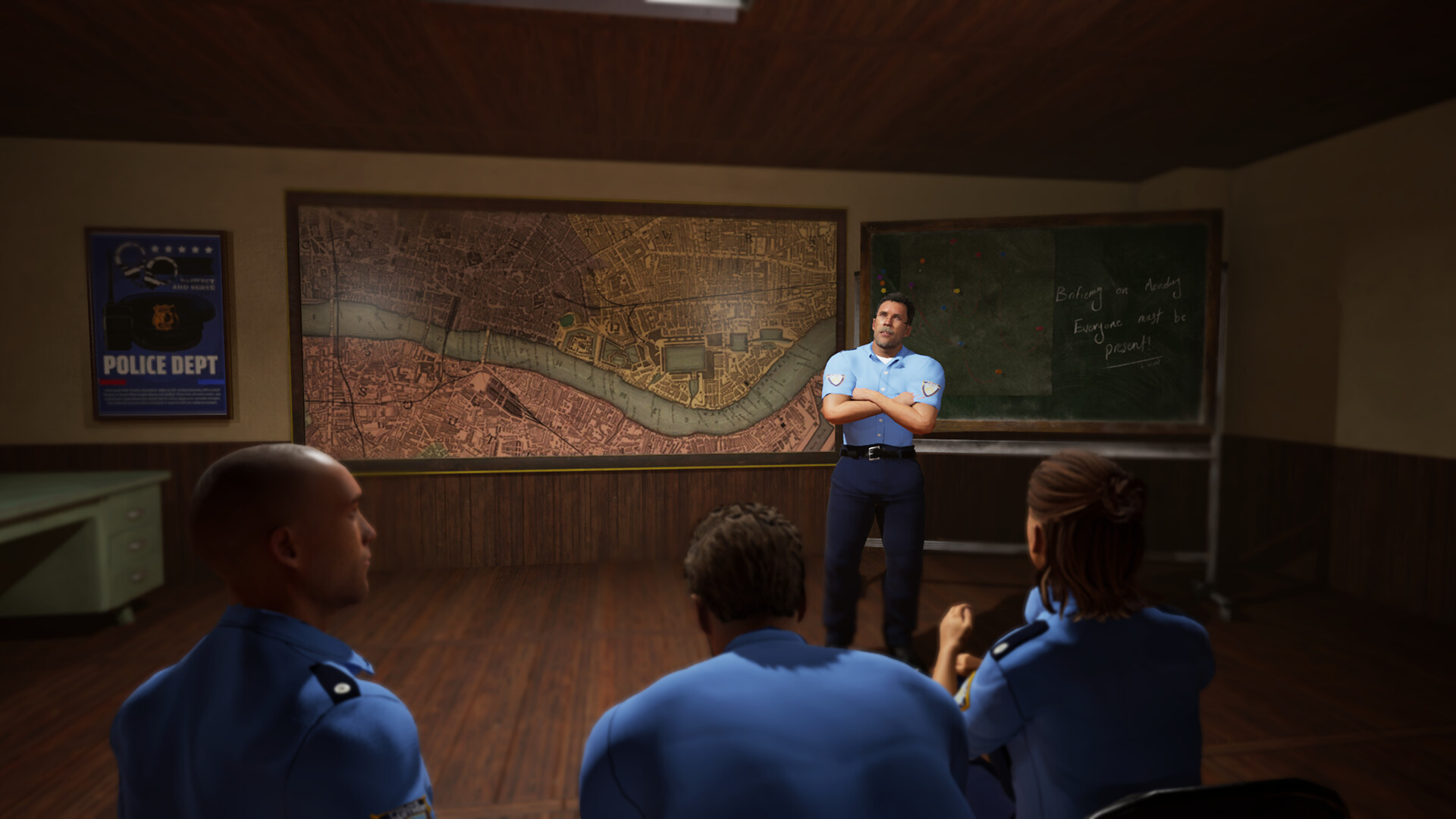
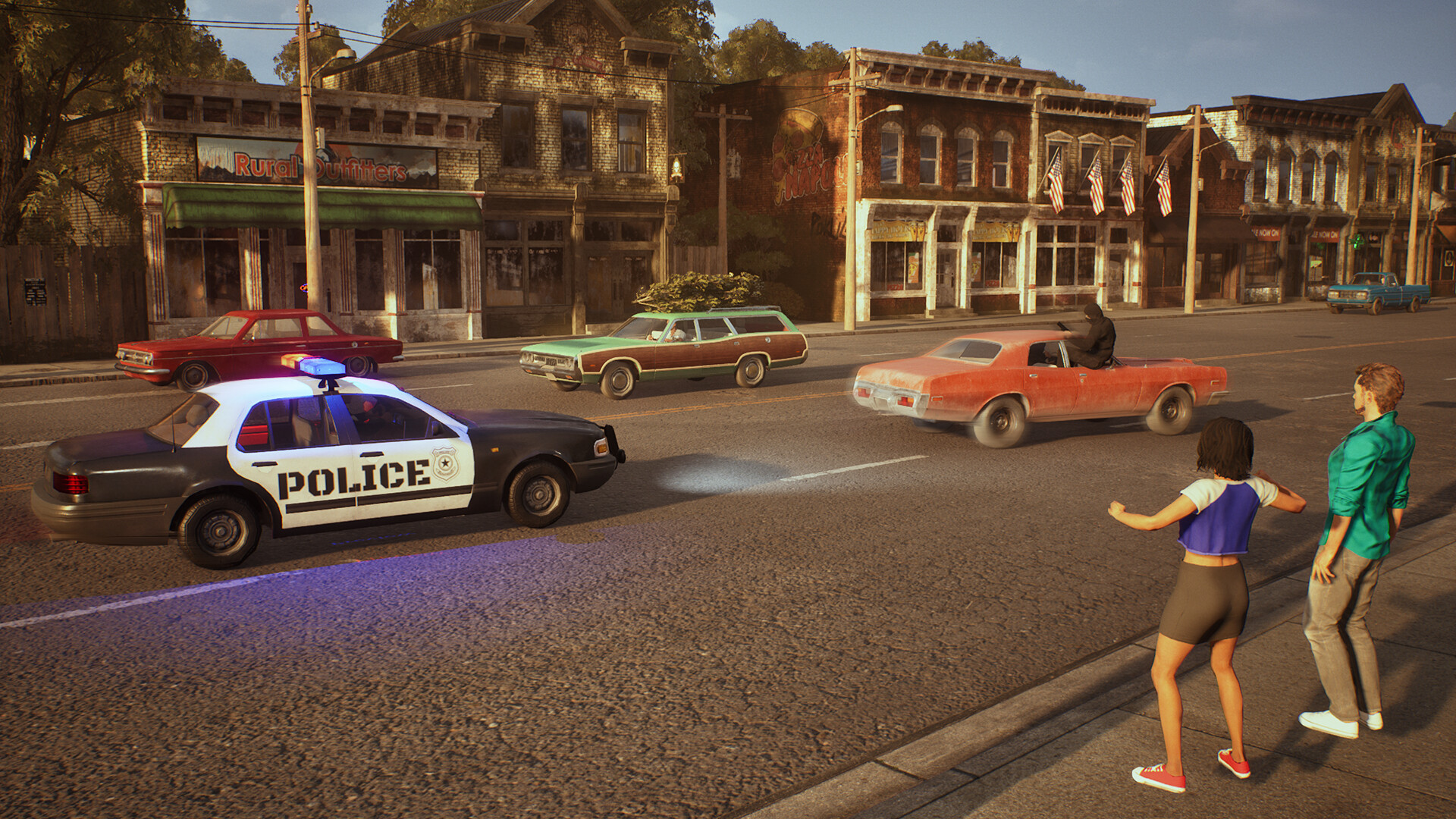
Dispatch is the game's delegation layer: instead of chasing every criminal yourself, you send hired officers to close cases. The official devlog describes the flow — 'the chief selects a case, assigns officers, chooses equipment, and sends the team into the city' — and the Winston Springs map tracks each deployed team with a return timer so you always know when the muscle comes home.
Missions come from your own case pipeline: a case expanded in the detective room becomes a dispatchable file on the briefing board. Files show a difficulty rating from one to five stars, and the board shows a success percentage that updates as you add staff and equipment — the core decision is whether the odds justify the gear you are about to hang on the wall rack.
Strategically, dispatch is how the game lets you be in two places at once: your officers work a mission timer while you work the desk or the street. Every efficient late-game stream runs exactly this way — the chief never idles, because the station shouldn't either.
Unlocking the loop
Dispatch requires three things built in sequence: a detective room (to expand cases), a briefing room (players paid $1,250 for it), and staff. The briefing room's unlock call forces the staffing step — Ron orders you to add lockers (about $500 for two) and hire officers before the room becomes operational. A garage later adds vehicle dispatch, described in-game as increasing mission success and reducing mission time.
The armory connects to dispatch too: equipping it (about $950) lets you gear teams from a wall of pistols and handcuffs. Footage shows the full unlock chain taking players into mid-game — it is not early content, and trying to dispatch before staffing properly just wastes case files you could have faxed for guaranteed cash.
The unlock order matters less than the dependency direction: files flow from detective room to board, people flow from lockers to board, gear flows from armory to mission. Starve any of the three and the whole loop idles — which is why it is built as a chain and not a menu.
The success-chance math players actually use
The board's percentages make the strategy legible. One documented example: a three-star theft case starts at 45% base, two officers add 8 points to reach 61%, two guns and two sets of handcuffs push it to 81%, and adding a vehicle pushes past 100% — '101% chance' — with players reporting modifier stacks like '20% from the vehicle… 29% total with all the stuff.'
Two community rules round it out. Equipment is not consumed on success: guns and cuffs come back (cuffs are recovered from arrestees), so gearing up is an investment, not a cost. And odds above 100% are not invincible — one streamer lost an officer 'in action' on a mission that started at 100%, and a 99% mission failed because the in-game day ended before the team returned.
The practical formula players converge on: staff to comfortable majority, gear to high 80s, vehicle to guarantee — and never dispatch after mid-afternoon, because the clock kills more missions than the criminals do.
Running a mission end to end
The physical flow, as footage shows it: take the expanded case file to the briefing board, assign officers, pick equipment, and confirm the dispatch. Officers visibly walk out of the station (or drive off from the garage dispatch zone), and the Winston Springs map shows their marker with a countdown — observed missions ran from about 30 seconds to two minutes of real time, faster with a vehicle.
On success, the team returns with a prisoner who must be registered at a holding cell, which feeds the prison-booking income loop. On failure or a day that ends mid-mission, you lose the mission's value and sometimes more — players recommend dispatching early in the day and keeping manual saves before big bets, because the board itself has been known to glitch after overnight missions.
The moment worth savoring: your team walking back through the door with a suspect in tow while you are mid-paperwork. That is the payoff of the whole management layer — the station working while you work, independently of you.
A final calibration for expectations: dispatch is strong but not automatic money. Missions consume files your desk could have faxed, staff consume wages whether they deploy or not, and gear takes minutes to cycle. The run videos that profit from dispatch are the ones that keep it constantly fed — expanded cases in the morning, teams out by midday, cells full by evening.
Common mistakes and how to avoid them
Watch outThe recurring errors are consistent across footage: dispatching understaffed missions (low odds burn the case file), sending weak officers on three-star files (injury risk), ignoring the clock (missions that cross midnight fail), and forgetting the garage bonus (vehicle dispatch is strictly better when available).
The fix is a checklist habit: stars versus odds, gear equipped, time of day checked, vehicle assigned. Once that is routine, dispatch becomes what it is designed to be — a passive income and reputation engine running while you handle street patrol or paperwork yourself.
And when a mission fails anyway, read the board before blaming the odds: the most common true causes are a day that ended early or a team sent without cuffs. The system is legible; the mistakes are usually ours.
Run the loop for a week and the arithmetic becomes instinct: you will know a two-star file from a three-star by the odds it opens with, know your officers by how their missions end, and know it is time to hire when the board is hungry and the cells are not. Dispatch mastery is just the station's pulse, read daily.