When arrests unlock and what you need
Arrests are officially part of the design — the Steam description lists open-world police activities and 'hunt criminals' as core play — but the tools are gated. Community full-game footage shows the arc starting with Ron's call: 'Head to the local gun shop. Get yourself a firearm, handcuffs, and some rubber ammunition.' That call is the dividing line between the paperwork game and the street game.
The shopping list from Bare Arms: a 1911 pistol at $450, packs of .45 ACP rubber ammunition at about $30 each (~40 rounds after unpacking), and handcuffs at $30 a set. One streamer's full loadout with tactical gear and two cuff sets came to $610. Rubber ammunition is the ethical default — the tutorial warns that unjustified live fire 'will not be tolerated,' and the game tracks how you use it.
Budget note from the footage: the gear pays for itself in two or three bookings, so there is no reason to delay the shopping trip once Ron calls. The chief who keeps policing from a desk after the street unlocks is leaving the game's best income on the table.
Spotting crime and starting the chase
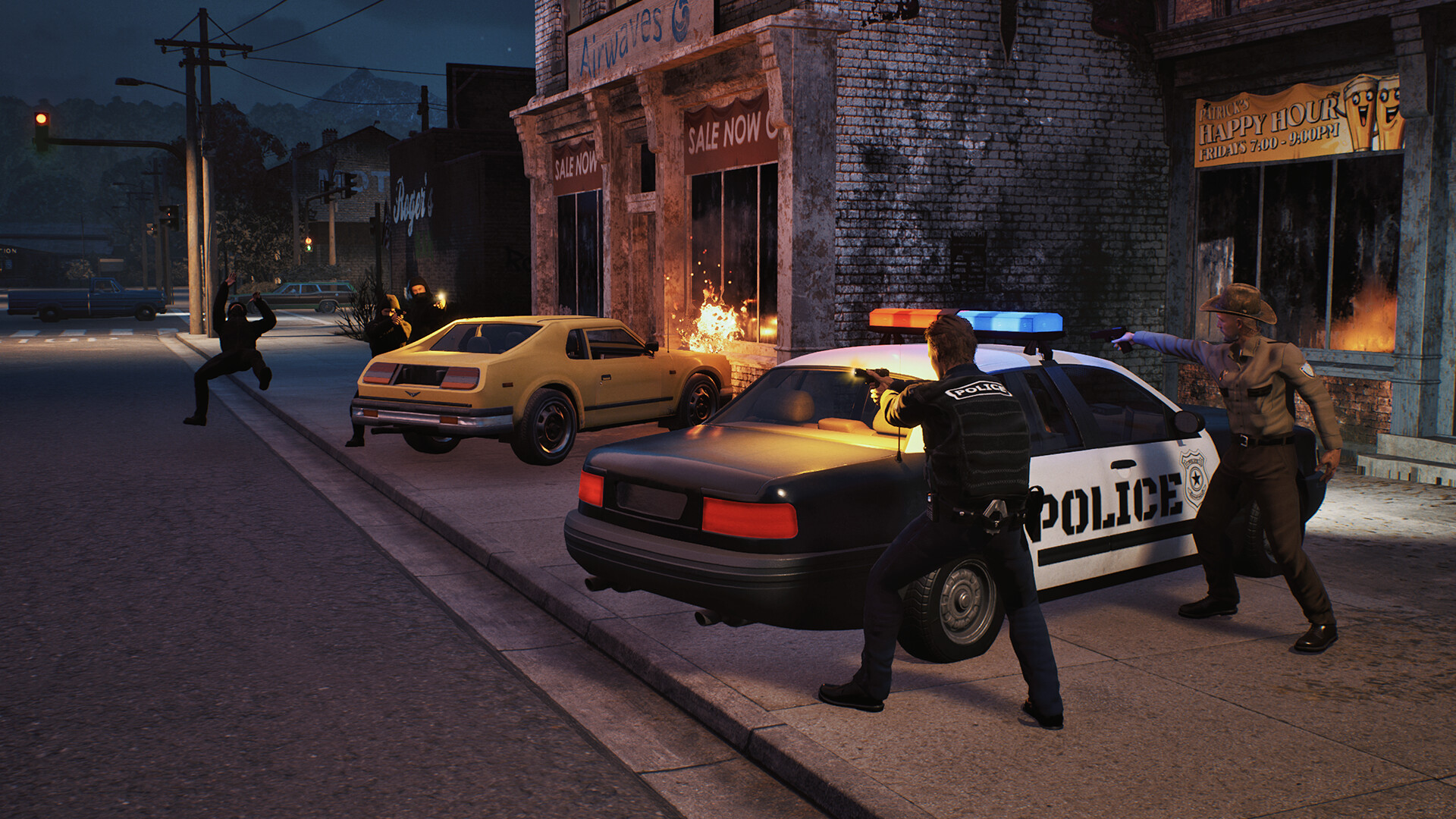
Crimes announce themselves with a red marker and the game's tutorial flavor: listen for the spray-can sound of graffiti vandals, watch for 'shady individuals lingering around vehicles that do not belong' (fuel theft), and react to 'criminal activity spotted' alerts. The launch devlog adds that the offence system generates incidents randomly — even a red-light crossing can escalate into a stop, a search, and a night in the holding cells.
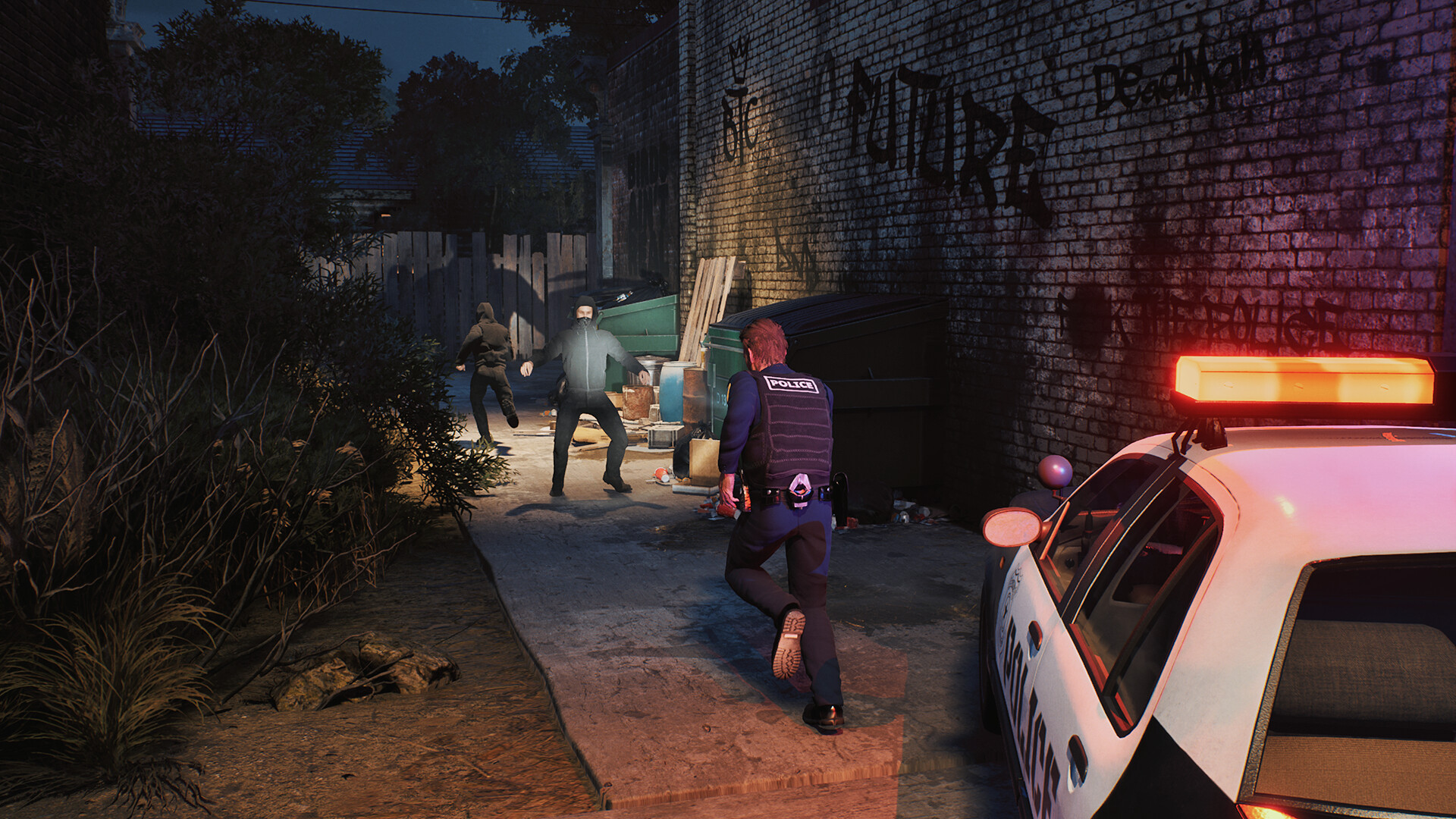
Most suspects run. The pursuit flow in footage: sprint after them and fire rubber bullets — a hit produces a 'SUSPECT DOWN' knockdown, and some suspects surrender instead of fleeing at all. Rubber rounds are non-lethal by design; headshots in footage down suspects fastest without killing them, keeping the arrest legal, your record clean, and your 50 reputation safe from innocent-booking fines.
The chase has physics worth respecting: stamina limits the sprint, fences break at speed, and corners are where pursuits are won. Veterans let the suspect run a block before firing — a downed suspect two streets from their car is a longer carry than one dropped near the curb.
The handcuff-and-carry interaction
Downed or surrendered suspects get cuffed: equip the handcuffs and use the cuff interaction while standing over them. From there the game is deliberately physical — you pick the prisoner up over your shoulder and carry them, because 'it doesn't let you toss them,' as one player put it. Walk them to your cruiser's rear doors and place them inside yourself, one body at a time.
Capacity is real: prisoners ride in the rear seats only — no trunk, no front seat — and a determined player managed three by strapping one into the cargo area and 'driving really carefully.' Cuffs are consumed by the arrest unless you recover them at booking, so carry spares; five spare sets cost one player $150, stored in the trunk alongside spare ammunition packs.
The physicality is the joke and the point: this is a game where the chief of police personally ferries suspects like a taxi service, and the designers knew it. The community's affection for the game grew around exactly these undignified, fully simulated moments.
Booking at Winston County Prison
Delivery completes the arrest: drive to Winston County Prison, walk your prisoner to the designated intake area, and use the booking camera for front-and-side photos while the game lists their charges — gas theft, resisting arrest, and graffiti all appear in footage. The payout lands at the warden's desk: money ($75–$250 observed) plus reputation, and your handcuffs are returned for the next arrest.
Watch outThe one documented way to lose at booking: arrest the wrong person. A player who cuffed an innocent bystander with corn cans in his pockets watched 50 reputation vanish. The game checks guilt at the desk, so chase people who actually committed the crime you witnessed.
The booking desk also humanizes the game one last time: charges are read out, photos are taken, and the cell door closes on a person the game generated with a name and a face. It is the same system that processed a lost wedding ring that morning — one county, one file cabinet.
Arrest efficiency and the bigger loop
Once holding cells are built at your station, arrests feed a batch loop: book prisoners at the photo wall, stage them on the holding board, then deliver several per prison trip — or call the transport service at about $105 per prisoner, which is convenient but pays far less money and reputation than personal delivery.
Dispatched missions also produce arrests without you: a successful briefing-room team walks back in with a captured criminal, ready for your cells. Between your own chases and your officers' missions, prisoners become the game's richest income-and-reputation stream — which is why the arrest arc, once unlocked, becomes the daily rhythm of the late game.
A note on safety for new chiefs: your first chase will be clumsy, and that is fine — the footage is full of players tackling their own cuffs, missing the rear seat, and carrying suspects to the wrong door. The systems are forgiving on the street and strict at the booking desk, so learn the physical parts cheap and save your mistakes for anywhere but the camera.
The efficiency frontier, per the footage, is route planning: arrests near the prison side of town, paperwork batches before you leave, cuffs and ammo restocked the night before. The best street cops in this game are the ones who never come back for forgotten handcuffs.
One control quirk to know before your first arrest: players report the refill action and handcuff handling sharing the same right-click binding — meaning a mistimed cuff near a supply station can trigger a refill instead, or vice versa. It is a two-second confusion in the field, not a game-breaker, and knowing it exists is the whole fix: watch the context prompt, not the muscle memory, when your hands are near both a shelf and a suspect.