The rule: no booking, no payday
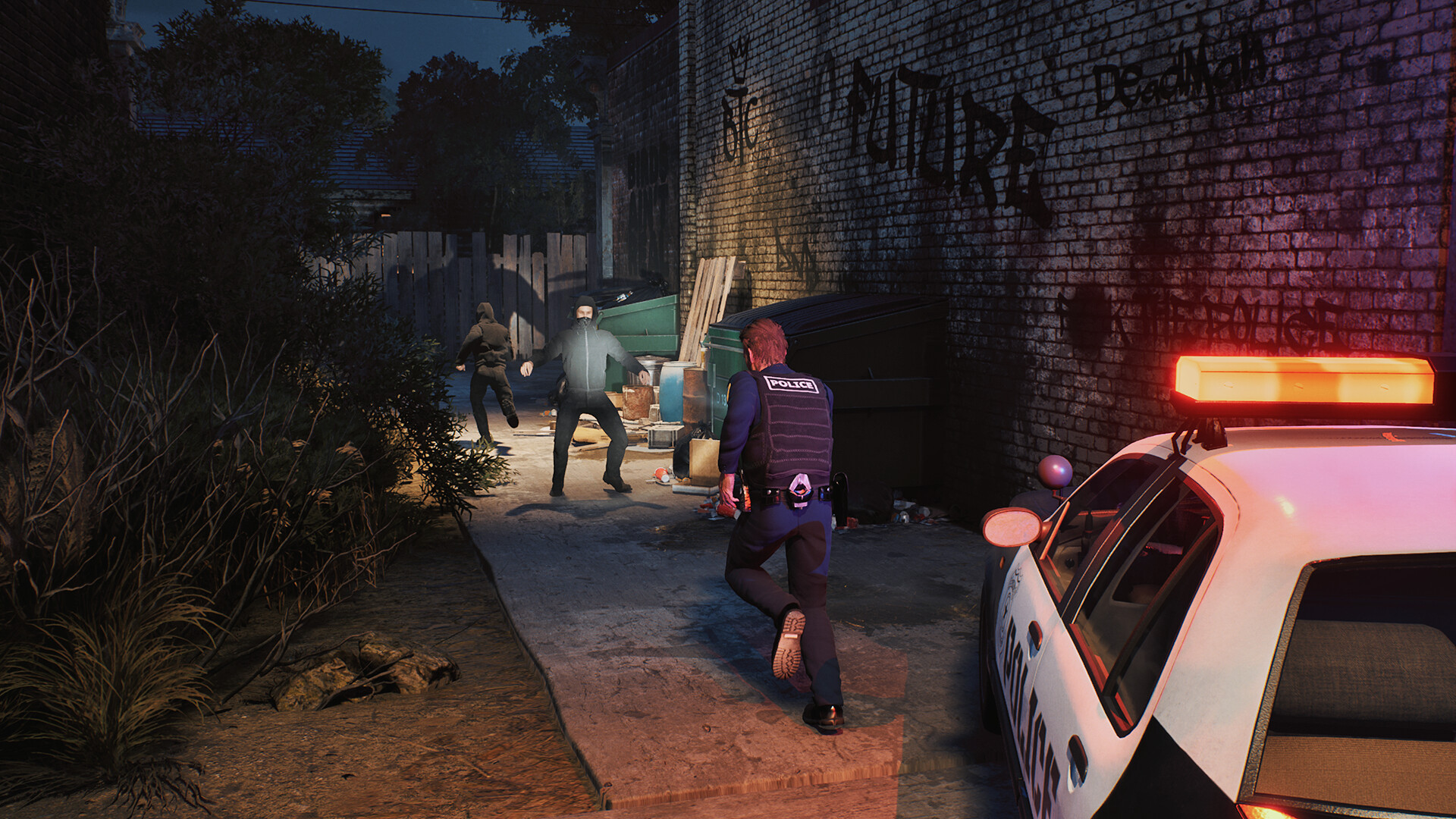
The game's tutorial is explicit that an arrest is not finished at the street: 'Arrest the criminal, handcuff them, place them inside a police vehicle' — and the payoff only comes at the prison. An untransported prisoner earns nothing, and prisoners can even wait cuffed in your car overnight if the day ends first, per one player's lazy-but-functional strategy.
That makes transport capacity a genuine economic constraint. Your cruiser seats prisoners in the rear only — no trunk, no passenger seat — and two is the comfortable number, with three possible by strapping one into the cargo area. Until the transport van exists, every arrest plan starts with 'how many bodies fit in the car.'
The constraint shapes good play in a subtle way: it teaches you to end pursuits near your car, to patrol in loops that pass the prison, and to think of the cruiser as rolling cells. Every veteran route on video is built around that arithmetic.
Personal delivery: the profitable way
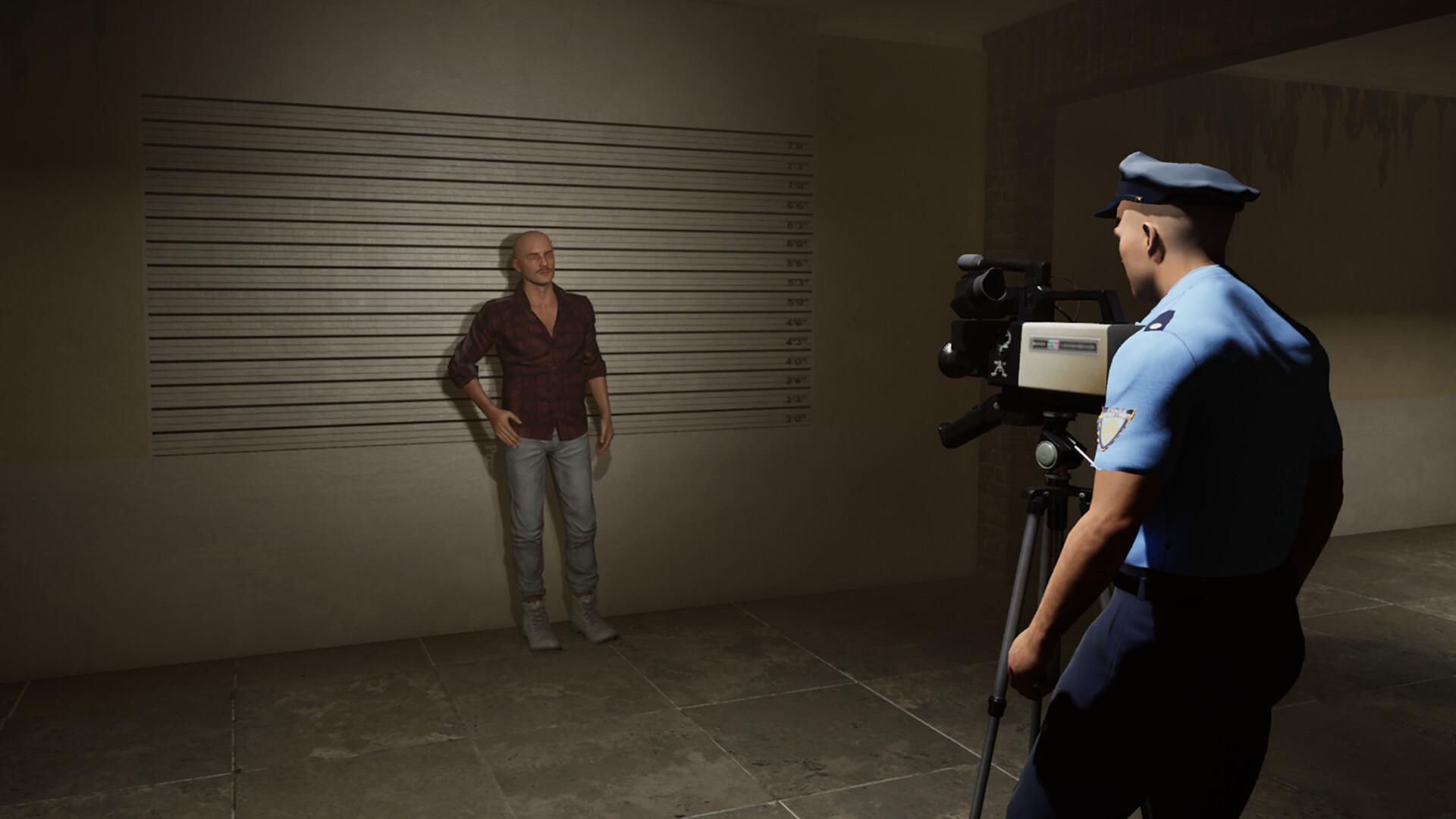
Personal delivery is simple and rewarding: drive to Winston County Prison, walk the prisoner to the designated intake area, and take the booking photos (front and side) at the camera while the game lists their charges. Collect money, reputation, and your handcuffs at the warden's desk — one player's summary: 'There's my cuffs and my money.'
The numbers justify the chore: observed payouts per prisoner run $75–$250 depending on charges (a level-three theft case paid $250), with roughly 15 reputation per delivery — players comparing methods note self-delivery pays 'much more money and much more rep' than the alternative. A two-prisoner run at $100–$175 each is a solid income block for a few minutes of driving.
The trip also has a rhythm players come to love: siren on, prisoner breathing in the back seat, the county rolling past at law-abiding speed. It is the game's most honest power fantasy — not the chase, but the quiet drive after it.
The transport van: convenience at a price
The prison transport van automates the chore. It is unlocked by a 'call for a transport' objective, ordered through the furniture catalog for about $700, and once it arrives, prisoners in your holding cells walk aboard on their own — 'They're going to keep picking up criminals for us and we won't even need to leave,' as one player put it. Dispatch pickups by phone at 968-7000.
The trade-off is per-prisoner pay (about $105, with no rep) and lost handcuffs — cuffs are not returned when the transport collects your prisoners. The community consensus: use the van when your cells are full and you are busy, but batch-deliver personally whenever you want the money and reputation that fund the late game.
Do the math once and the decision makes itself forever: two personal deliveries at $150 average plus 30 rep, versus one van call at $210 total and zero rep. The van is a time machine, and time machines cost exactly the difference.
Holding cells and the booking board
The station's holding cells (about $1,890 to build; upgradeable, one run showing an eight-prisoner cap) turn transport into a managed queue. Booked criminals 'join the queue to be registered and assigned to a cell,' approach the photo wall for their front-and-side shots, and appear on the holding board with their expected prison value — one board entry read 'Sarah Thompson. 200 bucks.'
From the board, transport is a drag-and-drop: park a vehicle in the designated zone behind the station and drag the prisoner's record onto the vehicle icon, with available seats depending on the vehicle. The game even teases a future automation — prison staff 'may come to collect inmates when they have time' — which matches the devlog framing of continued post-launch development.
The holding board is quietly the best UI in the game: a live ledger of everyone in your custody, what they are worth, and where they are going. Reading it each morning is the late-game equivalent of checking the weather.
Transport mistakes that cost money
Watch outThe expensive mistakes are all front-loaded: forgetting spare cuffs (a lost $30 pair per unbooked arrest), overfilling the cruiser (physics and pathfinding both punish it), and letting the in-game day end with prisoners unsold — they wait, but your income timing slips a day. The transport van's low payout is also a trap for lazy players who never compare it to a $250 personal run.
TipBest practice from long runs: keep cells as your buffer, deliver personally in batches of two to three at day's peak, and reserve the van for emergencies or afk-style sessions. Transport is the tail of the arrest loop, but handled well it is the difference between a profitable precinct and a busy one.
The transport loop also pairs neatly with the day's shape: arrests accumulate naturally during afternoon patrol, cells hold them through the evening paperwork rush, and one final prison run before 21:00 converts the whole day's street work into money and rep exactly when the bills land. Timing, not speed, is the skill.
And the meta-lesson scales beyond this system: in a game about processes, the last step of every process is where the money actually materializes. Finishing things — cases, deliveries, days — is the whole skill.
The closing image from the footage says it best: a cruiser idling outside the prison at dusk, two prisoners in the back, a chief on his last delivery before the 21:00 bills. It is not glamorous — it is the whole game's economy in one parking spot, and the players who master it never wait for payday.
Watch outTransport had a bumpy launch and a fixed one: Hotfix #5 (September 18) repaired Police Van behavior after Holding Cells, Hotfix #7 stopped patrol vehicles stacking, and the #9–#13 window made Delivery Vehicles and the Prison Bus stop taking false infractions. Towing arrived with Update #1 (September 26) for detained drivers' cars — a separate system from prisoner transport, but the same behind-the-station vehicle zone logic. On a current build, transport failures should be rare; anything you hit past Patch #28 belongs on the Steam hub, not in a forum thread.