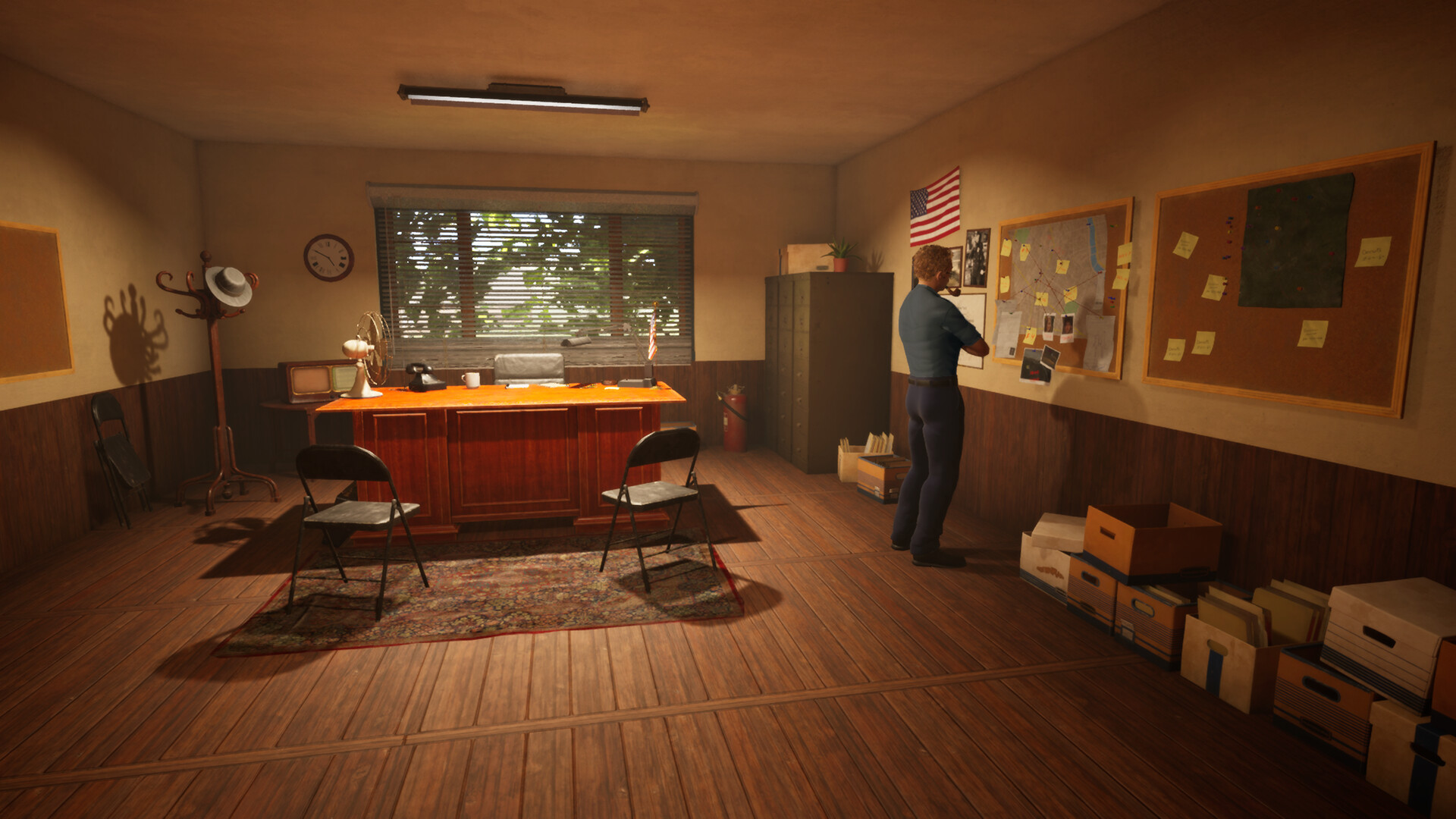
What the detective board is
The evidence board — 'detective board' to players — is a corkboard minigame inside the detective room where a case's facts become a puzzle. The official description groups it under 'Investigative and Detective minigames — register cases, expand them and work towards catching the suspect,' and the board is exactly that expansion step between registration paperwork and an executed case.
Its tutorial text, captured verbatim in footage: use a case file on the board to start the detective-room minigame; the file is scanned and run through the database automatically; printed documents go on the board; 'when the dots are properly connected… the case file can be sent to HQ.' The minigame is abstracted — one player notes the post-it positions are randomized and it is 'not connected to the city map,' so it plays like a self-contained puzzle.
That abstraction is a deliberate trade: you never leave the room, and the game never asks you to find a hidden object in the world. The detective fantasy here is administrative — reading, matching, connecting — which fits a game whose hero is a paperwork enthusiast with a badge.
Step by step: from file to cracked case
The full sequence as played: put the case file in the scanner, close the lid, press the button — the database search happens automatically and results print out (the printer needs paper, or nothing prints). Read the printed documents: one full-game example had the victim Bruce Lewis, the suspect Dorothy Martinez (identified as a 37-year-old paramedic with a record), and the incident address 645 Birchwood.
Pin each printout to its slot — victim, suspect, location — then drag strings to connect the three pins. When the connections are correct, take the photo of the board (the game walks you through it) and the file is marked 'case cracked.' A red button on the board wipes a case you started wrong, and one community guide reports it as the standard fix for stuck boards.
The whole loop takes a minute or two once learned, which is the point: it is designed to be run many times a day, in the gaps between visitors and missions. Mastery is not solving one hard case; it is solving fifteen small ones without dropping your coffee.
The database search: finding the suspect
Suspect identification runs through the station computer's database, searching citizens by traits from the file — occupation, age, sex, criminal record. The captured example reads like a riddle: 'a female with a criminal record, tall and 37 years of age' resolves to Dorothy Martinez; another case's 'occupation therapist, male, 46' finds its man the same way.
Print your matches and take them to the board. Misidentification is possible — the game accepts wrong pins and lets you photograph a wrong solution, wasting the file — so double-check each attribute against the case description before connecting. When in doubt, the magnifying-glass inspection of the original file is worth the energy it costs, every time.
The database is small enough that trait combinations usually have exactly one match, which keeps the minigame honest: if two candidates fit, you missed a trait in the file. Re-read before you re-print — the answer is always on the page you already scanned.
What cracking a case is worth
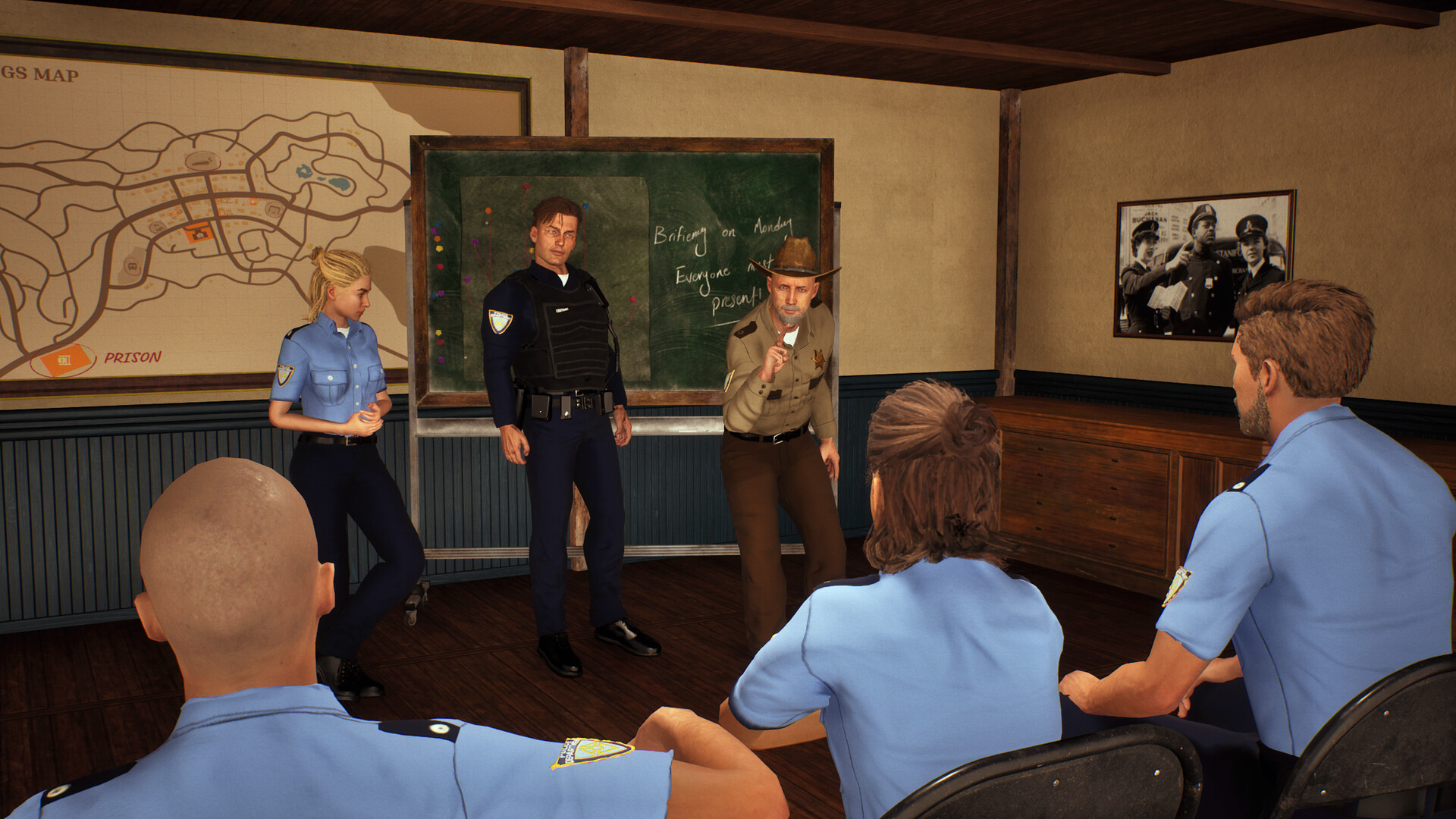
Cracked cases double the money: plain faxed files pay $15–$30, cracked ones about $60, and Prologue-era footage recorded cracked files paying $30 versus $15. A cracked case also feeds the dispatch pipeline — it becomes a mission on the briefing board your officers can execute, returning with a prisoner whose booking pays $75–$250 more.
The reputation line matters as much: solved cases are the main early rep source that unlocks your first station expansion. Community runs universally crack every case they can for exactly this reason — the board is both the best paying and the best progressing activity available in the first week.
And there is a compounding effect the numbers do not show: every cracked case teaches you the file format, the database, and the board's quirks. By your tenth solve, you are faster than the office worker you were going to hire to do it.
Board bugs, limits, and tips
Watch outKnown issues: a demo player bought the evidence board twice by accident (~$500 lost), an early-access streamer hit a board that refused a new case until a reload, and the wiki lead documents a failure state for boards that mirrors the registration screen's 'no reason to reject' trap. Save-and-reload remains the universal fix, and the red reset button clears a mangled board without losing the file.
TipPractical tips from players: stock printer paper before starting (an empty printer stalls the minigame mid-flow), keep cracked files moving to the fax rather than batching them (the day must not end mid-case), and remember the board's puzzle is self-contained — you never leave the room, so it is the perfect activity for the station's closing hours.
For players chasing efficiency: batch by star rating. Cracking two one-star cases takes less total time than one two-star, until your database searches are instant from practice — at which point the board becomes the best minutes-per-dollar in the building, better than the desk and rivaling the interstate.
The board's limits are worth knowing too: it will not generate leads the file lacks, and star-rated dispatch files pass through it differently than simple cases. When a file feels unsolvable, the fault is usually upstream — a form you approved that should have been rejected.
A closing thought for skeptics of corkboard minigames: the board is where this game hides its best joke — that a county's war on a criminal empire is won with printouts, string, and one very tired photo button. It is also where it hides its best pacing: ten minutes at the board between street shifts, and the whole economy breathes.